 ]]>
]]> ]]>
]]> ]]>
]]>
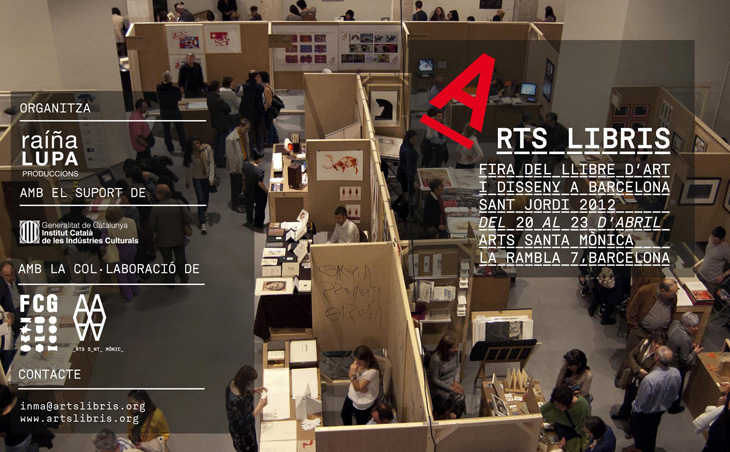
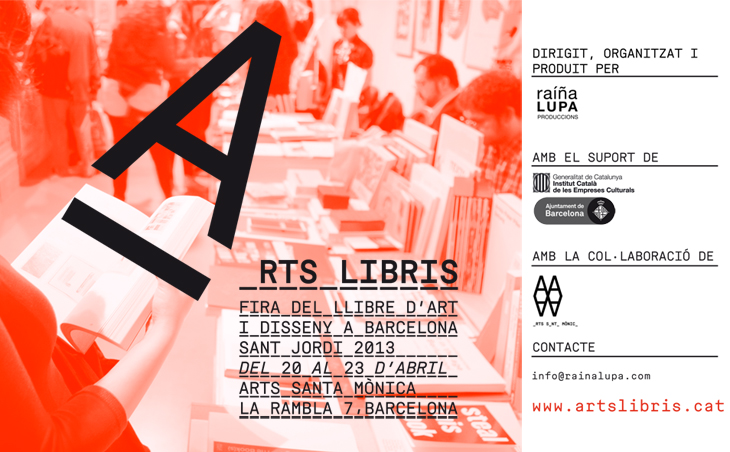
Arts Libris closes the circle of the creation and the production of books of artist and of graphic experimentation – with a long tradition and a big potential to our country-, contributing media and distribution. During Arts Libris the collector, the expert, the amateur and the curious will be able to have to his good scope part of the current panorama of this publishing field. A compilation that goes of the fanzine underground to the piece of bibliophile. In 2011 they incorporated like expositores the schools of art and design, because they mark the future of the creators.
With the aim to promote and spread the edition of author in the surroundings of the art and the graphic experimentation, Arts Libris, pretend to be a meeting point for professionals and amateur, producers and collectors, with a pair of small exhibitions, round tables, conferences and presentations of books.
The aim is that during the three days that lasts the meeting, the Arts Santa Mònica was a space of permanent activity and meetings of corridor and at the same time incorporate programs it Arts Libris OFF, the idea of the cual is to expand the fair to the rest of the city. The model of event is mixed, between a market, exhibitions and a mini congress.
]]>
 ]]>
]]>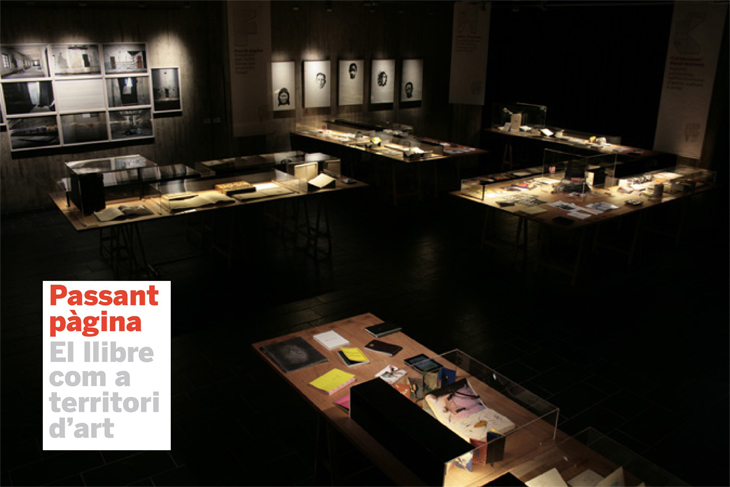
Passant página. El llibre com a territori d’art is an itinerant exhibition for eight catalans towns. This Project revolves around the artist’s book as a paradigm of the evolution of contemporany visual arts and focuses on the production of this type of book after the classical vanguards. It examines the most important outcomes of the use of books as groundbreaking artistic tools by classifying them into six different types: illustred books, artist’s books, books with more than one autor, poet-artist’s book and books that push boundaries.
The exhibition is made up of one hundred and forty books by acclaimed artists and others who are not as well know but whose contributions are considered equally valuable in that evolution. And special emphasis is placed on Catalan artists.
]]>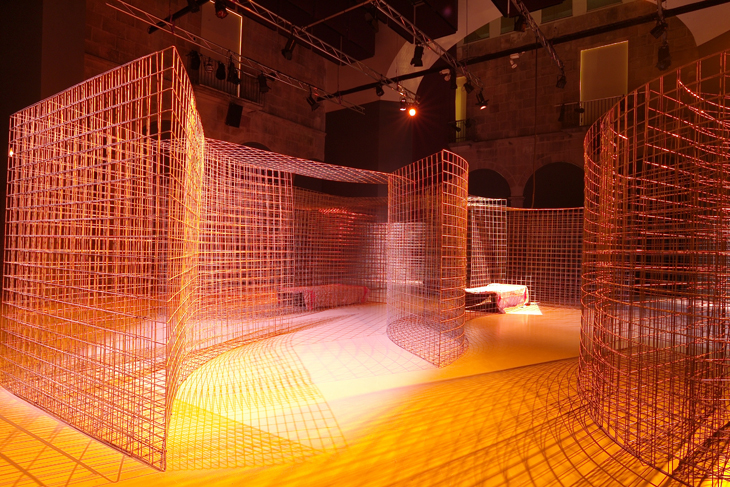
From I to J, of the hand of Isabel Coixet, is an installation-creation that surrenders homage to the thinker John Berger and a reflection for all those that adentren in the labyrinth of meshes contrived by the architect Benedetta Tagliabue.
Read to Berger is to dive in our own consciousness. See through his look, listenthrough his text From To to X read by ten of the most important European actresses.
A project that arises of a common will of creators and artists to surrender a homage to the universal thinker.
]]>
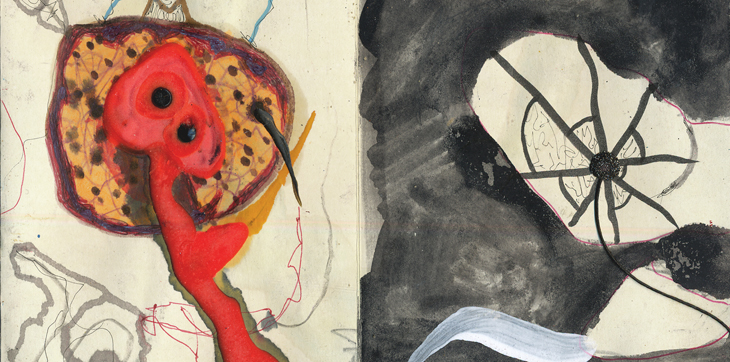
Elia (Alice di Carlo) – a young Italian artist born in Pescara in 1985 – connected with Evru through his studies and work around poetry, writing and drawing in 2011. Their common interests would lead them to make a series of leporellos, in which they reflect on the dissolution of the artist as a figure, a factor that has always been present in Evru’s work from his beginning through his change of identity, until arriving to the willing of making the “I” disappearing through the collective and web work.
In the leporellos of EliaEvru, the limits between the work of one author and another are inseparable, elaborating a language in which the flaw of line is unreachable and unattainable. They make a series of work on “four hands” in which the two authors dialogue through their drawings, they paint and erase on what the other drew, deepening in concepts such as identity, authorship, the loss of control over one’s work or the fragmentation and dissolution of individuality.
]]>
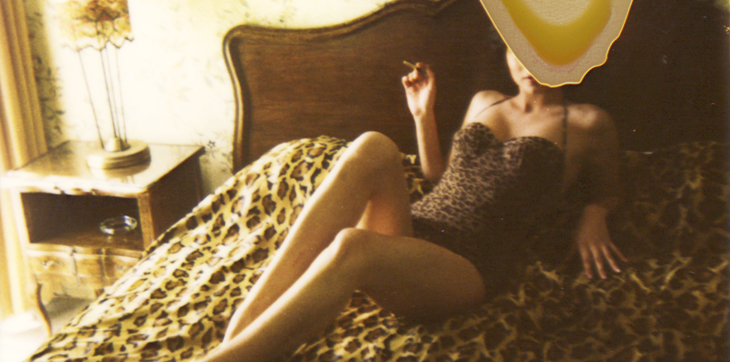
In many cases, there are images that result from luck and search, shot during the creative process of different photographic sessions with the only objective of obtaining the definitive picture. This small pieces which are dispossed of by the photographer after having a merely informative labour, were kept by Outumuro in an old box in his archive, titled TEST. They are tool-images that served, among other things and in the analogic era, to control the exposition to the light and the intensity in the laboratory.
In some of the cases the paradox is given that the final photograph never overcame the magic and strength of some of this tests. Rescued with eagerness, edited in a careful barium printing on paper and hung in this exhibition, these photographs assume their own identity.